Language
Currency
When mentioning China, many people often think immediately of bustling Beijing, modern Shanghai, or poetic Hangzhou. However, for those who love history and want to trace back the roots of Eastern civilization, Xi'an China has a unique allure. This is not only a tourist city but also a place that preserves the soul of thousands of years of Chinese history. Xi'an was once the capital of many prosperous feudal dynasties, the starting point of the legendary Silk Road, and is now one of the most important cultural and tourism centers in China.
Xi'an is the capital of Shaanxi province, located in the central northwest region of China. With its strategic position, Xi'an has historically played a key role in military, economic, and cultural matters. The city was once named Chang'an, meaning "eternal peace," and is one of the four largest ancient capitals in China.
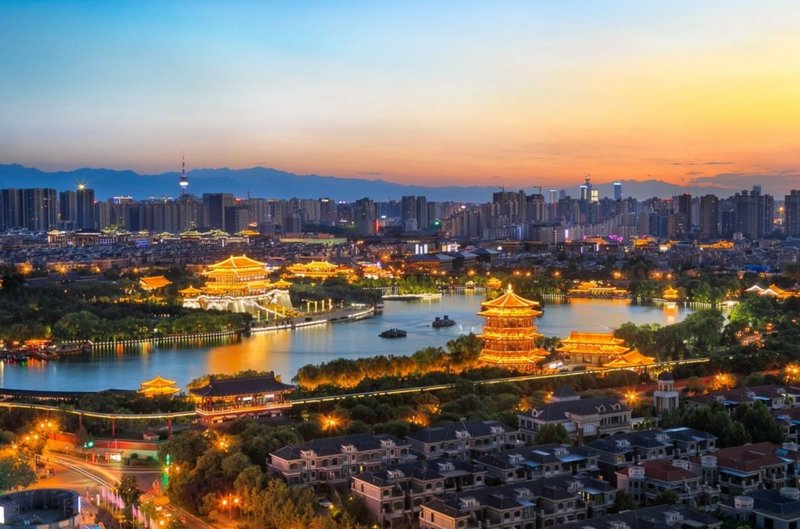
Today, Xi'an still maintains a rare balance between modern life and historical depth, making it an ideal destination for those exploring traditional Chinese culture.
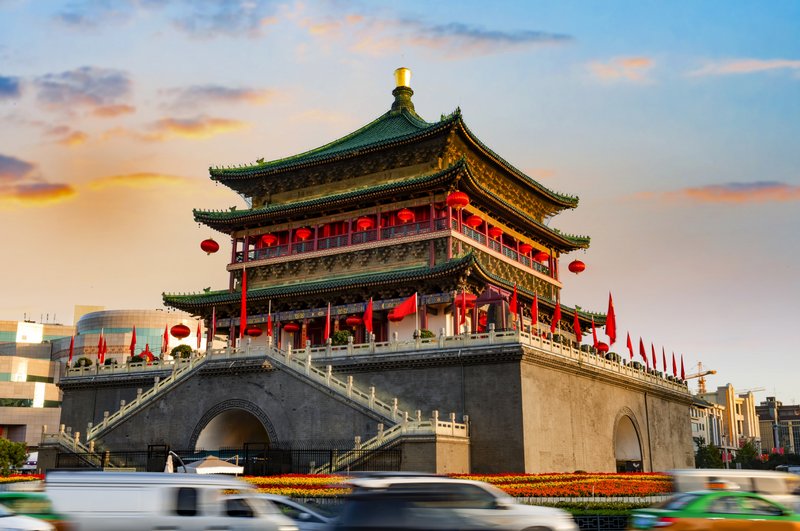
Xi'an was the capital of 13 major dynasties in Chinese history, including the Zhou, Qin, Han, and Tang dynasties. Notably, during the Tang dynasty, Chang'an was considered the largest and most prosperous city in the world, a center of international trade with hundreds of countries and territories.
It is from Xi'an that the Silk Road began to stretch out towards Central Asia, the Middle East, and Europe, contributing to the spread of Chinese culture, religion, and goods worldwide. The historical imprint is still vividly present through each monument, each street, and each site that has been preserved to this day.
When mentioning Xi'an, one cannot forget the Terracotta Army of Qin Shi Huang, one of the greatest archaeological wonders of the world. Thousands of life-sized soldier and horse statues buried with the tomb of Qin Shi Huang astonished the world when discovered.
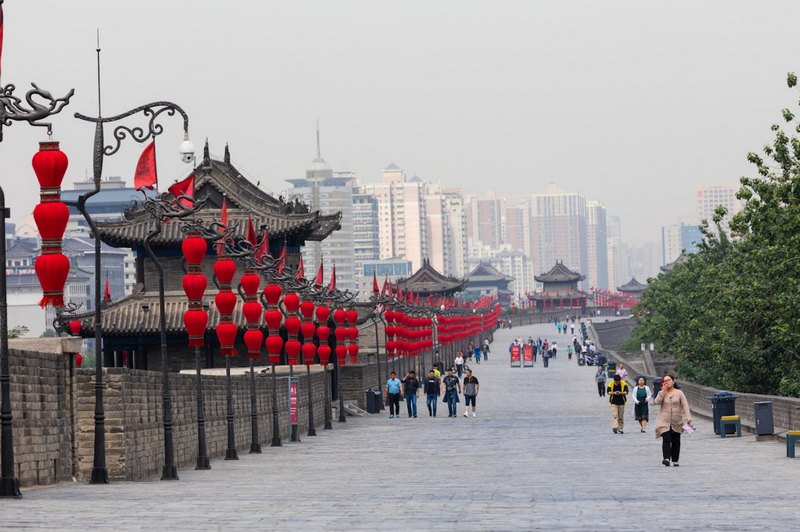
In addition to the tomb of Qin Shi Huang, the ancient city wall of Xi'an is also an iconic structure of the city. This is one of the best-preserved ancient city wall systems in China, allowing visitors to stroll or cycle along the wall to enjoy the panoramic view of the city, both past and present.
The Big Wild Goose Pagoda is another must-visit destination. This structure is closely linked to the development of Buddhism in China and was once a place for storing and translating Buddhist scriptures brought back from India. The atmosphere here provides a sense of tranquility amidst the bustling city.
Additionally, the Muslim Quarter with its vibrant night market is a place where visitors can vividly experience the diverse cultural life of Xi'an, a crossroads of Han and Islamic cultures.
The culture of Xi'an is deeply marked by history, clearly reflected in its architecture, festivals, and the daily lives of its people. This city preserves many forms of traditional art such as Tang dance, calligraphy, ancient musical instruments, and rituals with ancient court colors.
The cuisine of Xi'an is also a significant highlight for visitors. Dishes here often have rich flavors, using many spices characteristic of the Northwest region of China. Famous dishes like Biang Biang noodles, lamb dumplings, beef soup, and Xi'an baked buns are not only delicious but also reflect the long-standing trade history of the city.
The uniqueness of tourism in Xi'an does not lie in luxury or modernity, but in the depth of experience. Each destination in Xi'an is associated with a historical story, a period of rise and fall of feudal dynasties.
Visitors to Xi'an come not only to sightsee but also to gain a deeper understanding of the roots of Chinese culture, about how an ancient city adapts and develops in the modern world while still preserving its own identity.
The best time to travel to Xi'an is usually in spring and autumn when the weather is cool and pleasant, favorable for outdoor sightseeing. Summer can be quite hot, while winter is cold and dry, but suitable for those who enjoy a tranquil atmosphere with fewer crowds.
Choosing the right time will help make your trip to Xi'an more complete, especially for journeys that combine visiting historical sites and experiencing culture.
In China travel tours, Xi'an is often combined with Beijing, Shanghai, or Luoyang to create a balanced journey between history and modernity. This is an ideal stop for travelers who want to gain a deeper understanding of Chinese civilization rather than just visiting modern cities.
With developed tourism infrastructure, convenient transportation systems, and increasingly professional services, Xi'an is increasingly asserting its position on the international tourism map.
Xi'an China is not just a travel destination but also a journey back through history, where every street and every building tells the story of thousands of years of civilization. The harmonious blend of ancient and modern, of culture and life has created a unique charm for this city.
For those who love exploration, history, and experiencing cultural depth, Xi'an is certainly a must-visit destination in the journey to explore China with https://nvktravel.com/. If you are looking for a trip that is both enriching and emotional, Xi'an is definitely a worthy choice to set foot in at least once in your life.
Fill out the form and we will contact you