Language
Currency
Phu Lang Pottery Village is located about 60km to the north of Hanoi, and is a famous destination in the northern region of Bac Ninh province. It is recognized as one of the oldest pottery villages in our country and has become an attractive tourist spot. Here, visitors can experience and immerse themselves in a familiar and traditional atmosphere.
Phu Lang Pottery Village is situated in Phu Lang commune, Que Vo district, Bac Ninh province. After the merger, it belongs to Phu Lang commune, Bac Ninh province. This location lies by the Cau River and has many ferry stations transporting visitors back and forth. Thanks to this favorable position, many tourists have come to know it and it has supported the development of the pottery craft.
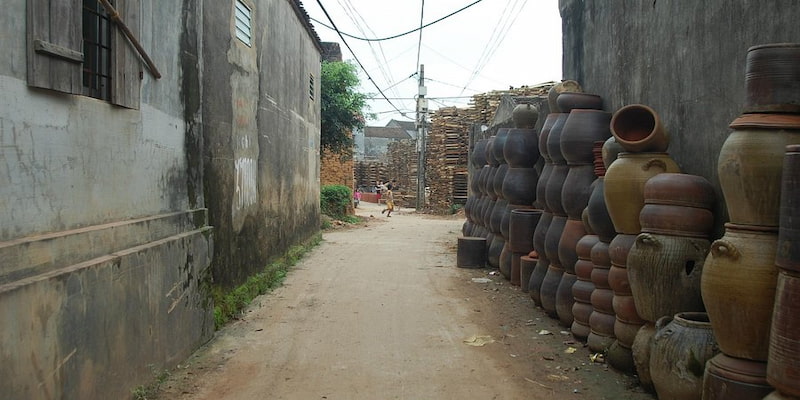
When you arrive, you will see the characteristics of the pottery craft village in the Northern region. The roads in the village wind along both sides, paved with bright white concrete. Along with that are the tiled roofs, undulating, and piles of golden straw by the roadside.
Phu Lang Pottery Village in Bac Ninh province
>>> See more: Dong Ho Painting Village - An Attractive Tourist Destination Today
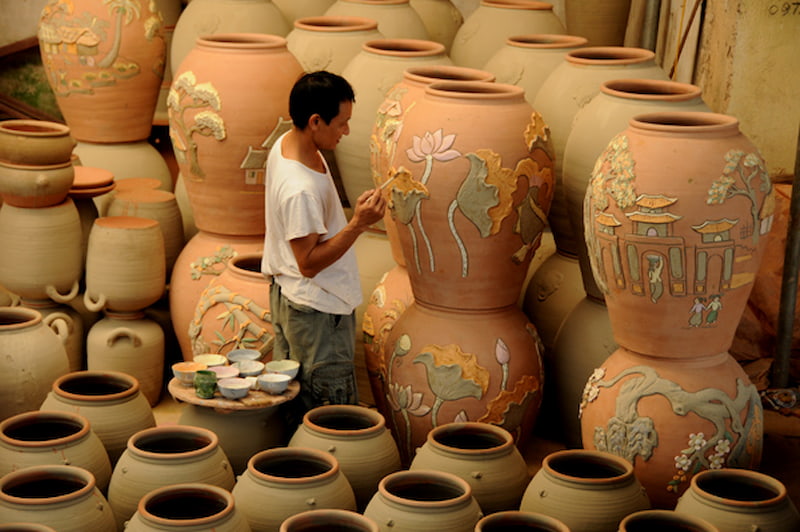
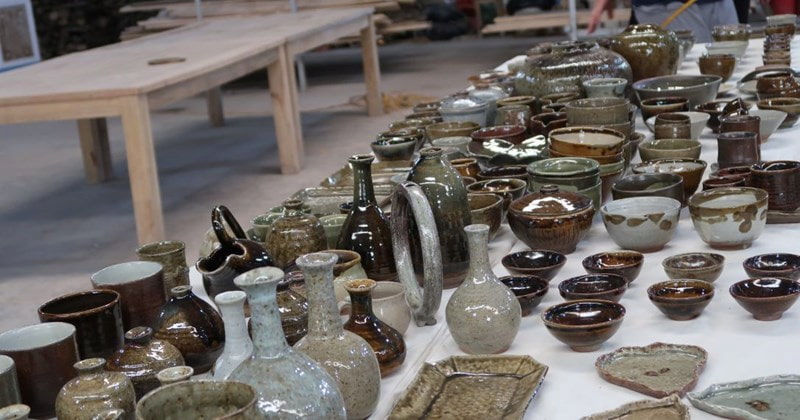
On the yard and the fields on both sides of the road, you will encounter all the products of the craft village such as: pottery vases, small jars, tombs, pots, bowls, ornamental plant pots,… They are stacked together in beautiful shapes. Some products are still wet from the clay, while a few have dried and gone through the firing process.
When visiting Phu Lang village, you will encounter many beautiful pottery products
>>> See more: Ba Chua Kho Temple - Complete Experience Guide for Tourists
According to many records, Phu Lang Pottery Village can be traced back to the 13th century, when the pottery craft began to form and develop in the Northern region. According to legend, the pottery craft was introduced to the village by a scholar named Dang from the Ly dynasty. He learned the pottery-making technique in the capital Thang Long and then returned to his hometown to teach the villagers.
Entering the 20th century, the pottery craft in Phu Lang village developed very strongly, during which many large-scale pottery kilns appeared. However, during the war period, the pottery craft here faced many difficulties and at times came to a standstill.
To this day, the pottery craft of Phu Lang is still being maintained. This place is not only a production center but has also become an attractive destination, attracting thousands of visitors each year.
Phu Lang craft village has been established for about 700 years
Phu Lang Pottery Village focuses on three main product lines including: Pottery used for worship (lamps, incense bowls, incense burners), household pottery (bowls, plates, jars, pots, basins, teapots, pipes, vases), decorative pottery (animal-shaped vases, jars, flower vases,...).
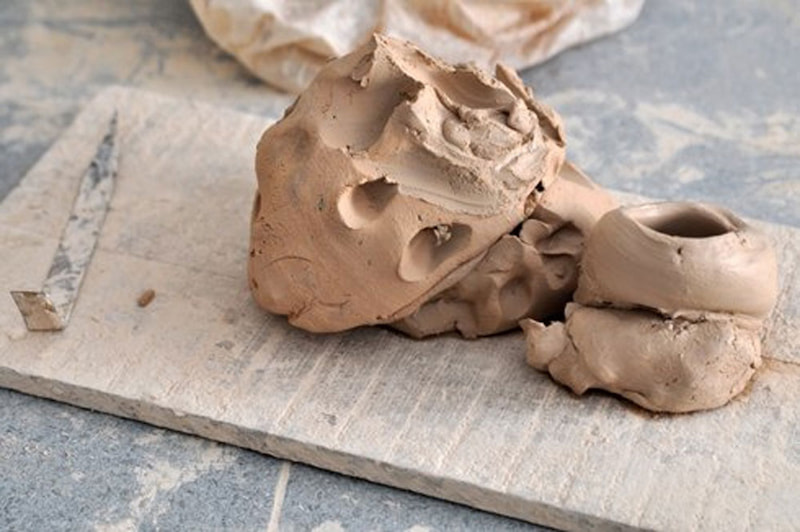
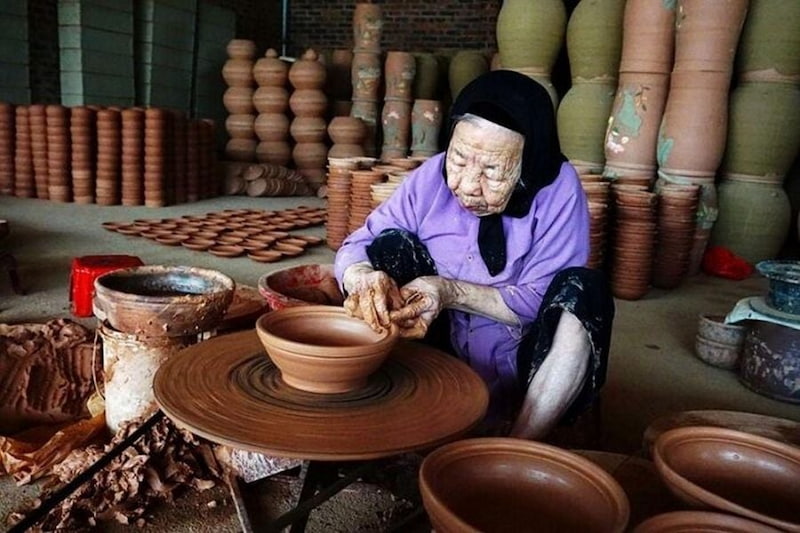
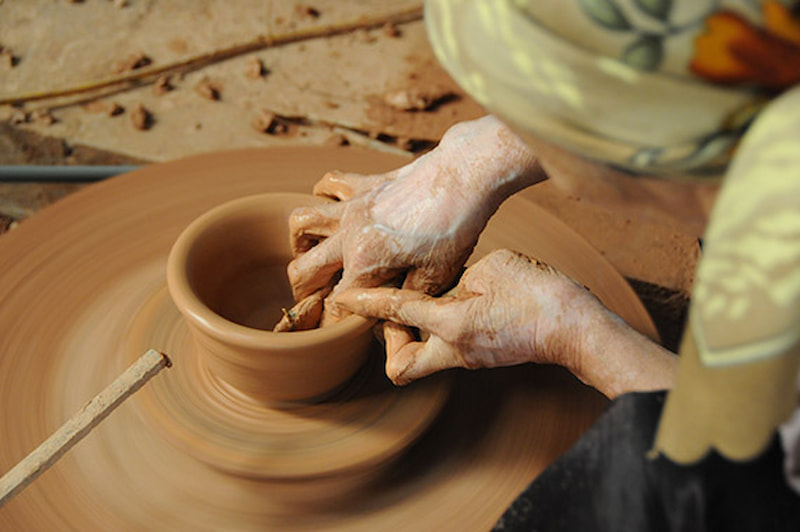
While Bat Trang pottery uses white clay, the material of Phu Lang village is pink clay from Cung Khiem and Thong Vat, Bac Giang. After collection, the materials and clay are dried, mixed evenly with broken clay into small pieces. Next, the clay is rounded, compressed, and sifted to obtain fine clay. Before shaping, the clay piece needs to be rolled into a ball 10 times before being placed on the wheel to shape.
Phu Lang pottery uses pink clay for production
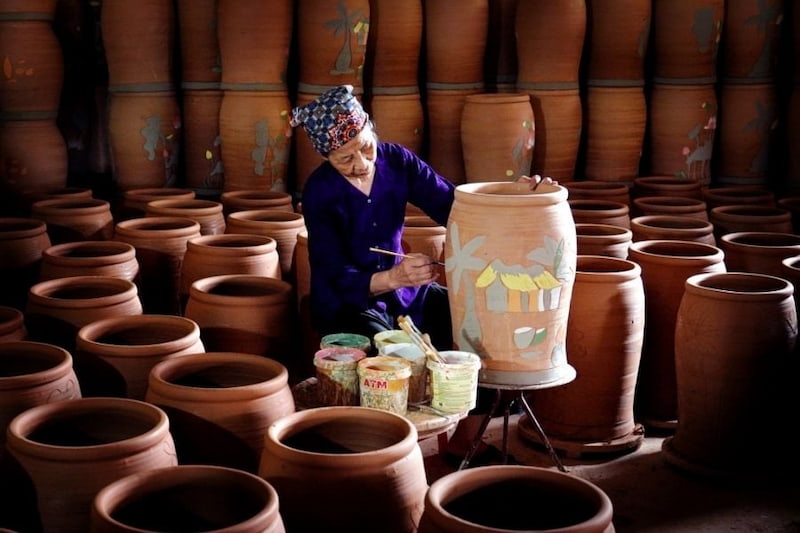
Phu Lang Village uses the relief carving method along with natural glaze colors. Although the shapes are simple, you will see strength and robustness. To shape, two basic methods are used: on the wheel and then carved in wooden molds or using clay molds that are assembled together. The products will be dried thoroughly to avoid cracking and deformation. After completion, they will be returned to the kiln for firing.
The production process of Phu Lang pottery has many special points
Traveling to Phu Lang pottery village promises to bring everyone unique experiences and the opportunity to learn more about the traditional craft. Here are some useful tips we want to suggest to tourists when visiting this location.
You can visit Phu Lang pottery village at any time of the year. However, for the best experiences, everyone should choose from September to April of the following year.
According to the villagers, this is the time when the Northern climate is the coolest and most pleasant, convenient for visiting and experiencing pottery making. You should not visit in the summer as the weather is very hot, which may affect the experience of tourists.
The ideal time to visit Phu Lang village is from September to April of the following year
When coming to Phu Lang pottery village, you do not have to pay an entrance fee. However, to use and experience some services here, you will have to pay additional fees such as:
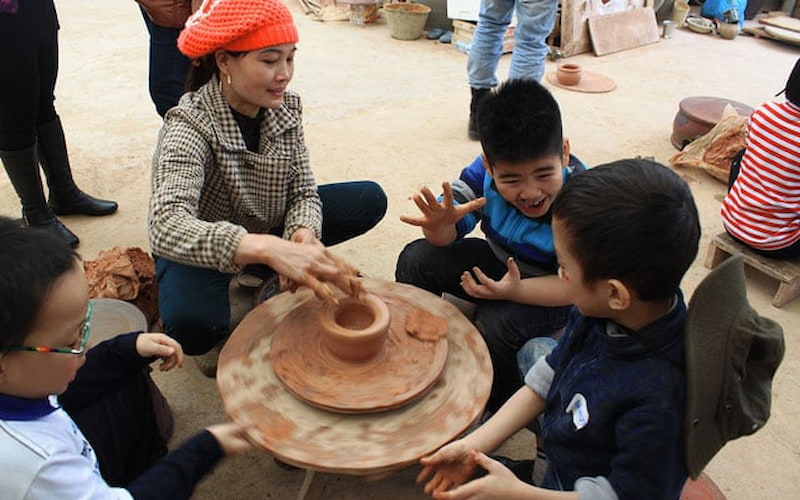
Pottery making costs about 50 - 100 thousand per person depending on the product
Phu Lang pottery village is about 60Km to the north of Hanoi. To get to this location, you can use various means of transportation such as:
You can travel to Phu Lang pottery village by taxi
Some activities you cannot miss when visiting this craft village:
At the tourist destination, you will have many beautiful check-in photos.
To make your trip to Phu Lang pottery village even more wonderful, you should refer to some notes below.
Phu Lang pottery village is a wonderful tourist destination for those who love traditional and peaceful spaces. With the rustic beauty found in each product along with the tranquil atmosphere of the ancient village, it will help you create memorable memories. If you want to have a meaningful and complete trip in Bac Ninh,don't forget to contact the website: nvktravel.com for more detailed guidance.
Fill out the form and we will contact you