Language
Currency
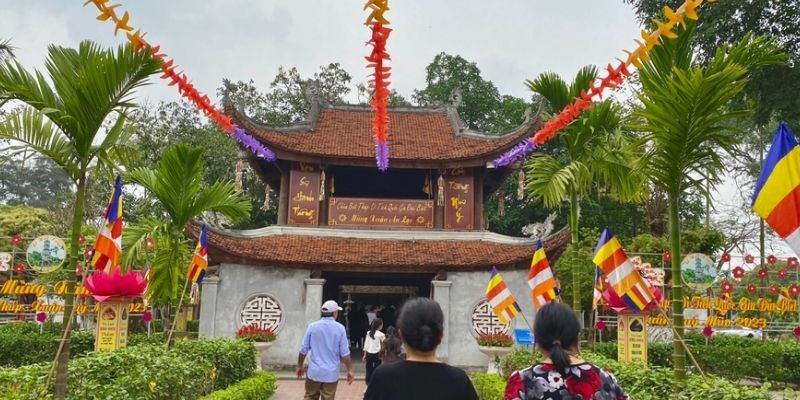
But Thap Pagoda has a history of hundreds of years associated with the ups and downs of Kinh Bac culture. This pagoda is an ancient spiritual landmark that attracts visitors from all over due to its antiquity and mystery. This National Heritage site is a must-visit for Buddhist followers and those who want to explore architecture and history.
But Thap Pagoda, also known as Ninh Phuc Tu, is located in But Thap village, Tri Qua ward (formerly Dinh To commune), Thuan Thanh town, Bac Ninh province. This location is about 25km east of Hanoi's center and can be conveniently reached by motorbike, car, or bus.
The pagoda dates back to the 14th century and is a structure that bears the architectural imprint of the Le and Nguyen dynasties, still intact to this day. According to many documents, this structure was built in the Hau Le period under the leadership of the eminent monk who contributed to the spread of Buddhism, Zen master Chuyet Chuyet.
During the Tran dynasty, this center of Buddhist worship in Kinh Bac was restored by the abbot, Zen master Huyen Quang. However, the major restoration that formed the current architectural style occurred in the 17th century.
But Thap Pagoda has undergone many restoration phases
>>> See more: Dau Pagoda: The Buddhist Center Over 1800 Years in Kinh Bac
The "hundred-room" structure with the "internal and external" layout still exists today despite having undergone 5 major and minor restorations. But Thap Pagoda was recognized as a National Heritage site in 1962 and as a special National Heritage site in 2013.
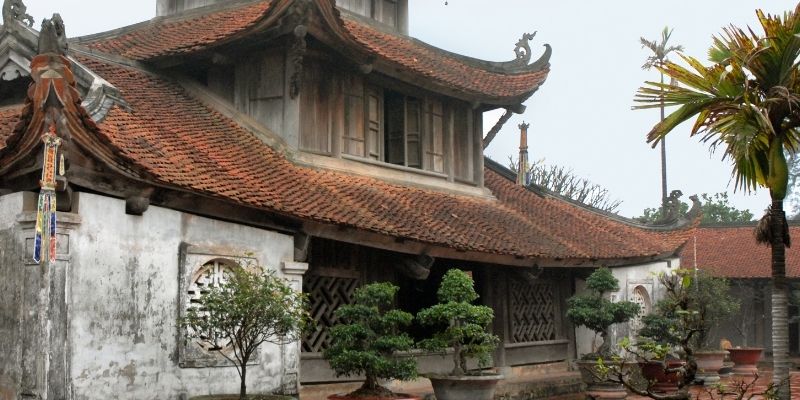
This pagoda is considered a spiritual worship center in the Bac Ninh region, loved by visitors for its monumental structures. Entering the pagoda, after passing through the Tam Quan gate, you will see the two-story bell tower with eight roofs and seven consecutive buildings including:
To enter the pagoda, you need to go through two side gates instead of the main gate with its curved roofs. Additionally, many types of trees such as areca, frangipani, lotus, and peony are planted around the pagoda, enhancing the solemn yet soft features of the structure.
Harmonious Buddhist architecture in a green space
>>> See more: Rent a Travel Car in Bac Ninh - Reliable Service for Every Trip
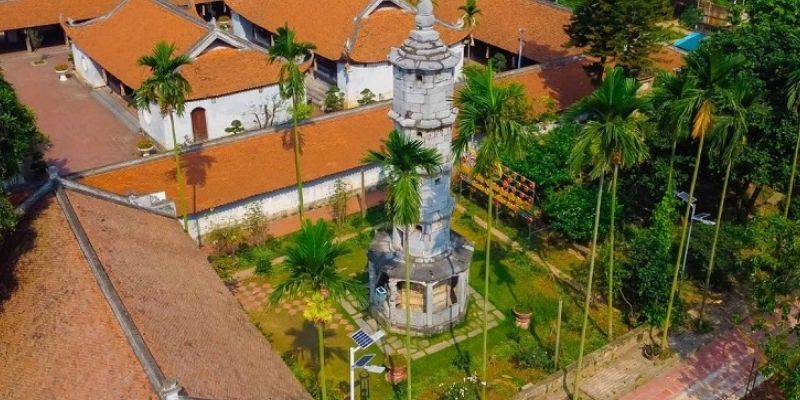
The center of the pagoda is the towering Bao Nghiem stupa. From a distance, it resembles a giant pen with 5 tiers and intricate floral patterns. Inside the stupa are 13 stone carvings of the words of the artisans of ancient Kinh Bac.
This pagoda is preserving 4 National treasures crafted intricately, bearing the imprint of the nation's history.
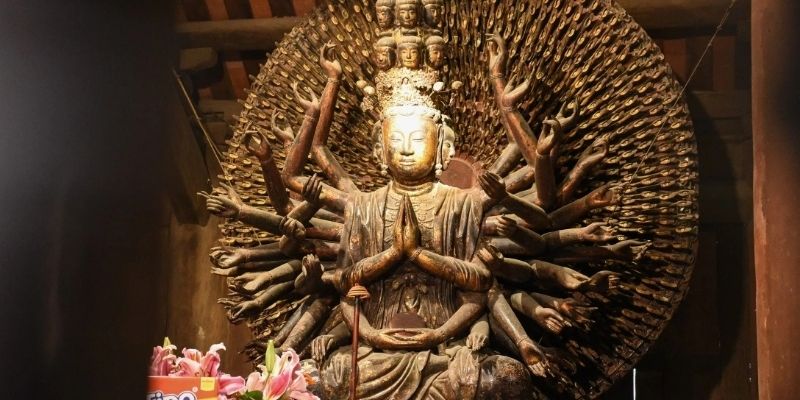
"Thien thu thien ngu - thousand eyes thousand hands" is a treasure that carries a strong Buddhist imprint. The statue has 11 heads, 46 large hands, 954 small hands with a height of 3.7m, width of 2.1m, and thickness of 1.15m.
On the head of the Bodhisattva is a dragon-shaped lotus, with each hand intricately carved along with thousands of eyes surrounding it. The outstretched arms help the statue emit a halo, clearly reflecting the philosophy of saving sentient beings in Buddhism.
The statue of Avalokiteshvara with a thousand eyes and hands is a National treasure
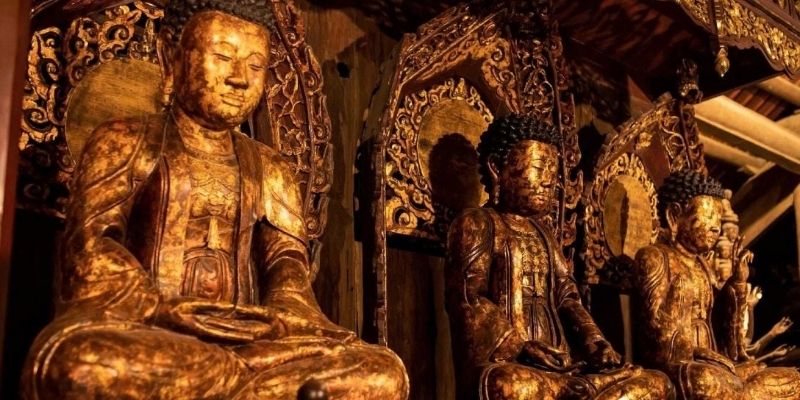
Visitors to But Thap Pagoda can easily see 03 statues of the Three Worlds right next to the statue of Avalokiteshvara. These three statues represent Amitabha Buddha presiding over the past, Shakyamuni Buddha presiding over the present, and Maitreya Buddha looking towards the future. All three are treasures of the pagoda, clearly reflecting the solemn imprint of Buddhism.
The Three Worlds statue stands majestically in But Thap Pagoda, Bac Ninh
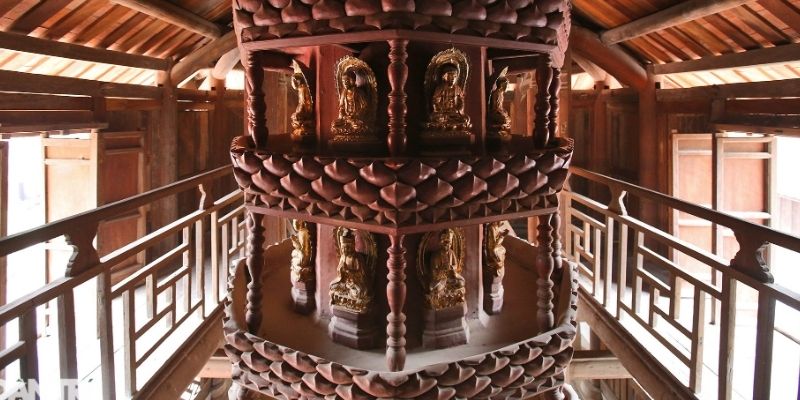
The Nine-Level Lotus is an octagonal stupa with nine tiers intricately carved from wood. This nine-tier lotus pedestal symbolizes the nine lifetimes of Shakyamuni Buddha's cultivation, with each tier carved with hundreds of Buddha statues along with flowers and birds..
The eight-sided wooden stupa with nine tiers is supported by fairy-like columns that can rotate silently. Currently, this is one of the three Nine-Level Lotuses still existing in the northern region. Therefore, it can be considered the most beautiful and valuable artifact at the pagoda.
Nine-Level Lotus - A spiritual symbol of Buddhism
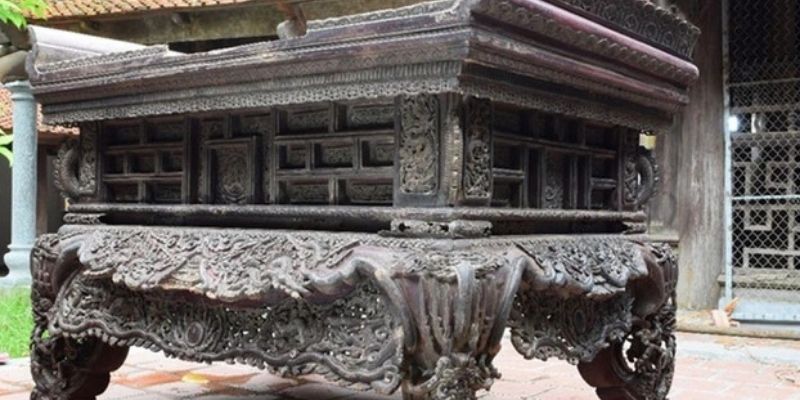
This pagoda is famous for many ancient incense altars that hold architectural and cultural value. The incense altar in the Upper Hall is a typical product that showcases the exquisite carving skills of ancient Kinh Bac artisans. Most of the incense altars here are intricately carved with elaborate designs connected to many famous historical stories.
The ancient incense altar is intricately carved within the pagoda grounds
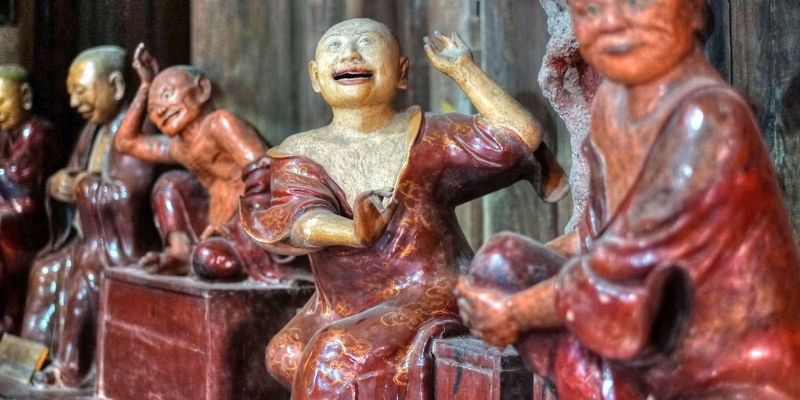
In addition to the aforementioned treasures, But Thap Pagoda also preserves 100 wooden statues and over 50 exquisite stone carvings. Every year, many visitors come to Bac Ninh and stop by the pagoda to admire these artifacts that carry a strong Buddhist imprint. Each structure has a long-standing history, encapsulating the cultural essence of Kinh Bac while also reflecting the solemnity of Buddhism.
Over 100 exquisite statues at the pagoda
When traveling during the festival season, you can feel the spiritual beauty of this land even more. If you have the opportunity to visit on the 23rd - 24th of the lunar month of March, visitors will witness many prominent rituals and cultural activities as follows:
The procession ceremony takes place early in the morning, with monks, nuns, and Buddhists respectfully lining up to participate in the ceremony alongside local residents. At this time, the sound of gongs and drums resonates, creating an extremely sacred and grand atmosphere.
After the procession, the temple will hold a incense offering ceremony in the main hall. Visitors can participate by lighting incense sticks to express their reverence for Buddha and pray for peace in the country, favorable weather, and harmony. Finally, the most important ritual is the bathing of the Buddha statue, symbolizing the cleansing of worldly dust and praying for tranquility and purity for the soul.
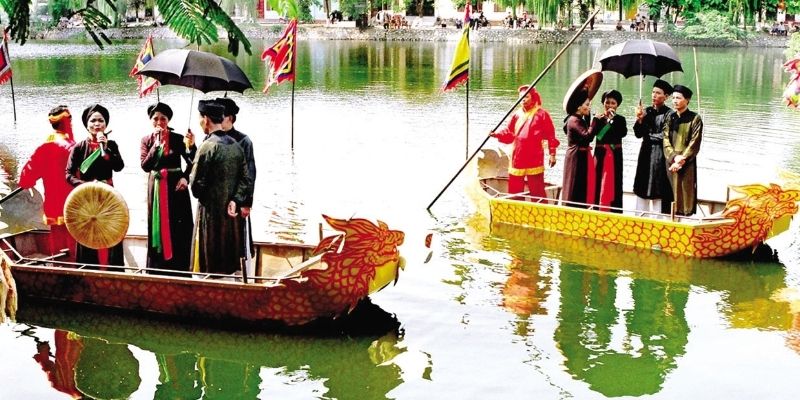
The But Thap festival takes place by the Duong River.
Singing quan ho on boats is the most popular activity here. Local singers in traditional four-part dresses will perform quan ho duets on the boat. Many games are also organized simultaneously to strengthen the spirit of unity among local people, such as tug-of-war, wrestling, cock fighting, and throwing con.
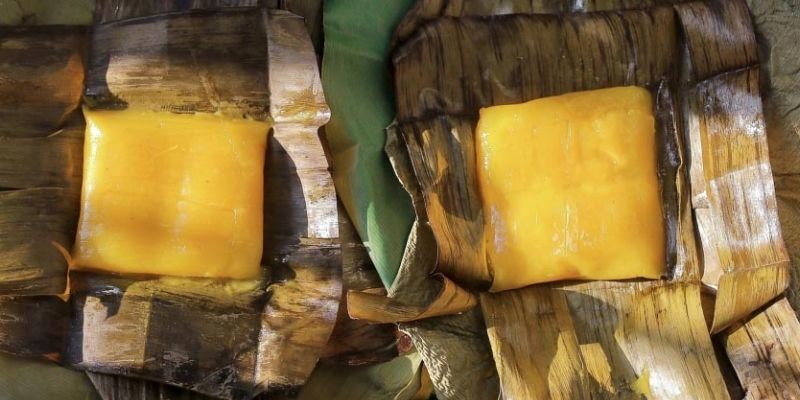
Visitors to But Thap temple can also stop by the local market to enjoy Bac Ninh cuisine. Here, you can buy local specialties as gifts, such as banh phu the, nem Bui, and Van village wine.
The famous specialty of Kinh Bac - banh phu the.
When visiting spiritual places like temples, you need to pay special attention to the following issues to show respect for Buddhism:
Visitors need to pay attention to clothing and behavior when visiting the temple.
But Thap temple is not only a spiritual structure but also an important historical and cultural relic in Bac Ninh. It symbolizes the traditional beauty of Vietnamese Buddhism that has been preserved through many generations. If you want to travel to Bac Ninh, and explore famous destinations, do not hesitate to contact NVK Travel via hotline: 0944 13 13 13 for further advice on tours and services.
Fill out the form and we will contact you